By refusing the limits placed around them, women in aviation changed flight: early pilots earned licenses and crossed oceans, wartime fliers moved military aircraft, and later generations entered airline cockpits, engineering, air traffic control, spaceflight, and leadership. Rather than a single story of one famous name, their history is a chain of specific breakthroughs. It runs from a French license numbered 36 in 1910 to 1,074 WASP graduates in World War II and 91,694 women holding U.S. pilot certificates at the end of 2024.
The first female pilots proved that skill had no gender
When a pilot certificate itself was still rare, the first female pilots entered aviation. On March 8, 1910, Raymonde de Laroche of France received license No. 36 from the Aero-Club de France, the first pilot license issued to a woman anywhere in the world. Beyond the credential, she won the Femina Cup in 1911 with a four-hour nonstop flight and set a women’s altitude record of 4,800 meters, about 15,700 feet, on June 12, 1919.
In the United States, Aero Club of America license No. 37 went to Harriet Quimby on August 1, 1911, making her the first American woman licensed to fly. With a Blériot XI, she landed just 7 feet 9 inches from her takeoff point. On April 16, 1912, she became the first woman to fly solo across the English Channel, traveling from Dover, England, to Calais, France.
Bessie Coleman found a route when U.S. schools refused her
The exclusion behind early flying is impossible to ignore in Bessie Coleman’s story. Born in Atlanta, Texas, on January 26, 1892, she could not enroll in an American flight school because she was a Black woman. Instead, she went to France and received a license from the Fédération Aéronautique Internationale on June 15, 1921. That license made Coleman the first African American woman and the first Native American, of Choctaw descent, to earn a pilot certificate.
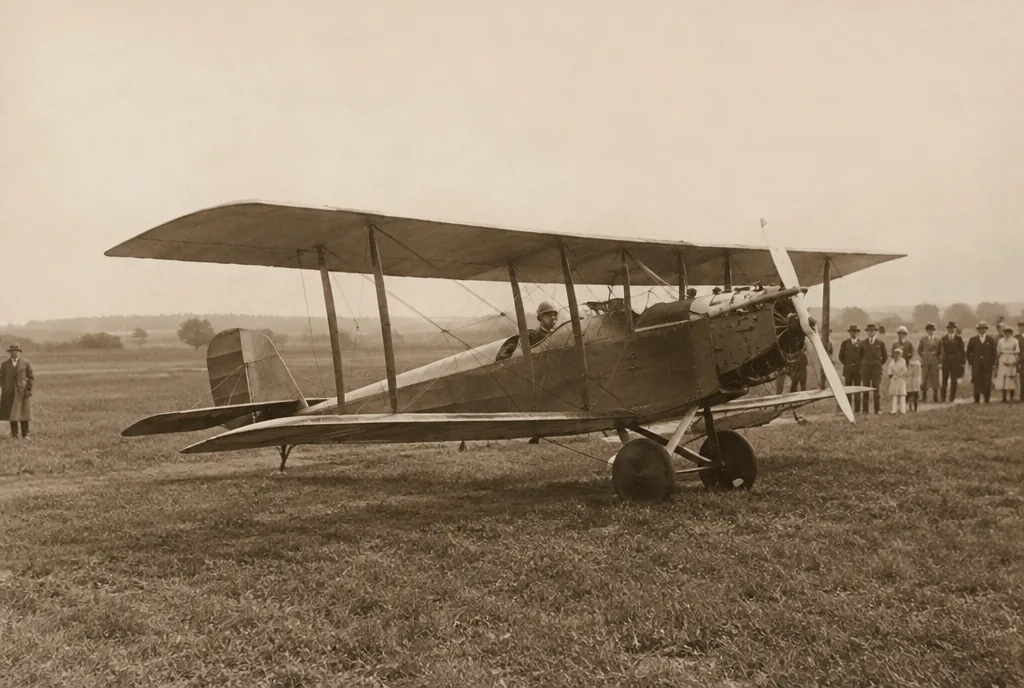
After returning in 1922, she opened a beauty studio in Chicago to finance her air shows. In practical terms, access to flight demanded more than talent: it also required money for training, aircraft, and public appearances. Known as Queen Bess, Coleman died at 34 when a Curtiss JN-4 Jenny crashed near Jacksonville, Florida, on April 30, 1926. The Bessie Coleman Aviators, founded in 1975, and the annual Bessie Coleman Day on April 30 keep her legacy alive.
Amelia Earhart made women in aviation impossible to dismiss
Because her flights reached a global public and established easily understood records, Amelia Earhart is the most famous woman in aviation. Between 1930 and 1935, she set seven women’s speed and distance records. On May 20–21, 1932, she flew solo from Harbour Grace, Newfoundland, to Culmore, Northern Ireland, in 14 hours and 56 minutes, becoming the first woman to fly alone across the Atlantic.
In 1935, the scale of those firsts expanded. Earhart became the first person to fly solo from Honolulu, Hawaii, to Oakland, California, and the first person to fly solo from Los Angeles to Mexico City. At Purdue University that same year, she served as a guest faculty member and built a counseling service for aspiring women pilots. Through that service, a record setter also made a route into aviation more visible to women who had not yet flown.
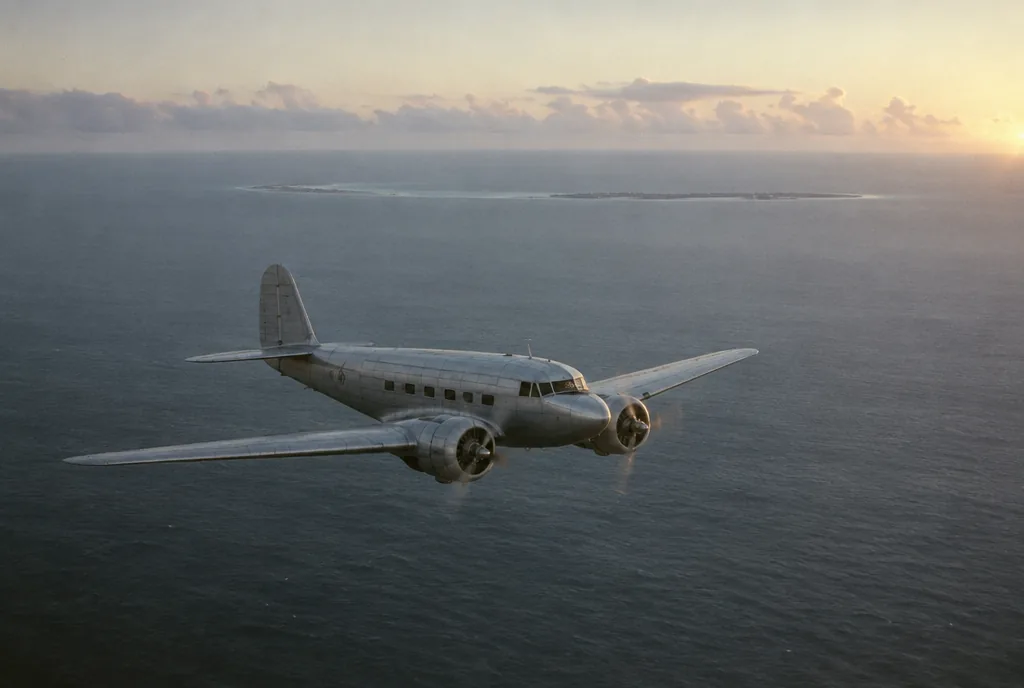
On July 2, 1937, Earhart vanished over the Pacific during her attempt to become the first woman to fly around the world. Her final radio contact came near Howland Island, and neither she nor her Lockheed Electra 10E was found despite what was then the U.S. Navy’s most expensive search. Beyond the unresolved disappearance, the completed flights and work at Purdue explain why her influence lasted.
The Ninety-Nines made a network out of isolated achievements
By 1929, women pilots in the United States had enough reason to organize and a strikingly small pool from which to do it. On November 2 at Curtiss Field in Valley Stream, New York, 99 of the nation’s 117 licensed women pilots founded The Ninety-Nines. In 1931, Earhart became the organization’s first president.
The name preserves the founders’ number; its work answers a continuing problem. Across 44 countries, The Ninety-Nines support women pilots through mentoring, scholarships, and professional connections. Since 1941, the Amelia Earhart Memorial Scholarship Fund has awarded more than $13 million to more than 1,200 women, backed by an endowment of more than $6 million. Where training requires sustained investment, that combination of money and peer support turns history into practical access.
WASP pilots flew the aircraft the war required
On August 5, 1943, Nancy Love’s Women’s Auxiliary Ferrying Squadron joined Jacqueline Cochran’s Women’s Flying Training Detachment to form the Women Airforce Service Pilots, or WASP. More than 25,000 women applied. From that applicant pool, 1,830 were accepted, and 1,074 completed four months of military training and received WASP wings.
In 560 hours of ground school, trainees covered navigation, aerodynamics, radio, weather, engines, and mechanics before 210 hours of flight training. WASP pilots tested, ferried, and transported 12,650 military aircraft and flew more than 60 million miles. They flew every type of aircraft in the U.S. Army Air Forces, including the B-29 Superfortress, a new and demanding aircraft that some male test pilots declined to fly.
| WASP measure | What it shows |
|---|---|
| 25,000+ applicants; 1,830 accepted | Selection was competitive before training began. |
| 1,074 graduates | These women completed four months of military preparation. |
| 560 ground-school hours + 210 flight hours | The program combined technical instruction with extensive flying. |
| 60+ million miles; 12,650 aircraft | WASP performed a large-scale flight mission inside the U.S. war effort. |
Despite military flight work, WASP pilots were civilians during their service. In 1977, they received retroactive veteran status. On March 10, 2010, President Barack Obama awarded the surviving WASP the Congressional Gold Medal, the nation’s highest civilian award.
Airline cockpits opened slowly, then women claimed command
Airline cockpits opened far more slowly than the sky itself. On December 31, 1934, Helen Richey became the first woman to fly a regular U.S. airline route, operating a Ford Trimotor between Washington and Detroit for Central Airlines. After only 10 months, pressure from the pilots’ union and the Department of Commerce forced her out of the cockpit. Not until 1973 were women hired again as U.S. airline pilots, a gap of 39 years.
On January 29, 1973, Frontier Airlines hired Emily Howell Warner as the first woman in a permanent U.S. airline pilot position. At that point, she had more than 7,000 flight hours, over four times the minimum requirement. On June 6, 1976, Warner became the first woman captain for a U.S. airline, flying a de Havilland Twin Otter for Frontier. Also in 1973, American Airlines hired Bonnie Tiburzi at age 24, making her the first woman pilot at a major U.S. airline.
Aviation offers women more than one path into flight
Beyond pilots, women in aviation includes women who engineer aircraft, direct aircraft as air traffic controllers, travel to space as astronauts, and manage aviation organizations. Eileen Collins shows the breadth of that definition: in 1999 she became the first woman to command a Space Shuttle mission, STS-93 aboard Columbia, and in 2005 she became the first woman to command a Shuttle mission to the International Space Station.
For women considering aviation as a career, U.S. numbers show both an established presence and an unfinished opportunity. FAA data for December 31, 2024, lists 91,694 women among 848,770 U.S. pilots, or 10.8%. Women held 9,768 Airline Transport Pilot certificates, about 5.5% of the total; among student pilots, 55,201 of 346,268 certificates belonged to women, or 15.9%. While the higher share among student pilots does not guarantee progression, it shows a substantial entry point.
Organizations and scholarships turn interest into training
Founded by Dr. Peggy Chabrian in 1994 and based in West Alexandria, Ohio, Women in Aviation International connects a large current community: about 20,000 members in more than 120 countries. From 150 people at the first annual conference in 1990, participation grew to more than 5,000. Since its founding, WAI has awarded more than $15 million in scholarships; in a single year, its program offers more than 50 individual scholarships worth over $200,000 for training, flight hours, technical study, and leadership programs. Since 2015, its Girls in Aviation Day has reached more than 40,000 girls each year. For helicopter pilots, the Whirly-Girls, founded in 1955, award annual flight-hour scholarships.
Three myths hide the actual history
Myth: women were absent from aviation until recent decades
De Laroche’s 1910 license, Quimby’s 1911 U.S. license, and Coleman’s 1921 French license show otherwise. Because access was unequal, their routes differed, but each was flying in aviation’s earliest era.
Myth: WASP pilots were symbolic rather than operational
By the numbers, that idea fails. After 560 hours of ground school and 210 hours of flight training, WASP pilots moved, tested, or transported 12,650 aircraft and logged more than 60 million miles.
Myth: a famous pioneer solved the access problem
Earhart’s record flights mattered, yet the 1929 founding of The Ninety-Nines by 99 of 117 licensed U.S. women pilots shows how few women had made it through licensing. In the 2024 FAA figures, women account for 10.8% of all U.S. pilots and 5.5% of ATP holders, a reminder of why mentorship and women in aviation scholarships still matter.
Frequently Asked Questions
Who is the most famous woman in aviation?
Amelia Earhart is widely considered the most famous woman in aviation. Through seven women’s speed and distance records, a 1932 solo Atlantic crossing, and a 1935 solo flight from Honolulu to Oakland, she became a public symbol of pioneering flight.
Who were the first female pilots?
On March 8, 1910, Raymonde de Laroche received the first woman’s pilot license worldwide. In the United States, Harriet Quimby became the first woman licensed to fly on August 1, 1911; after U.S. schools excluded her, Bessie Coleman earned her license in France on June 15, 1921.
What were WASP pilots?
During World War II, 1,074 women graduated from the Women Airforce Service Pilots program. As WASP pilots, they tested, ferried, and transported military aircraft but remained civilians until retroactive veteran status was granted in 1977.
Is aviation a good career for women?
Aviation offers women established careers in flying, engineering, air traffic control, spaceflight, and management. In 2024 FAA data, women made up 15.9% of U.S. student pilots, while WAI and The Ninety-Nines provide scholarships, mentoring, and networks.
What are women in aviation about?
Women in aviation refers to pilots, engineers, air traffic controllers, astronauts, and managers, past and present. The term also covers organizations and scholarship programs that help women enter, train, and advance in those fields.