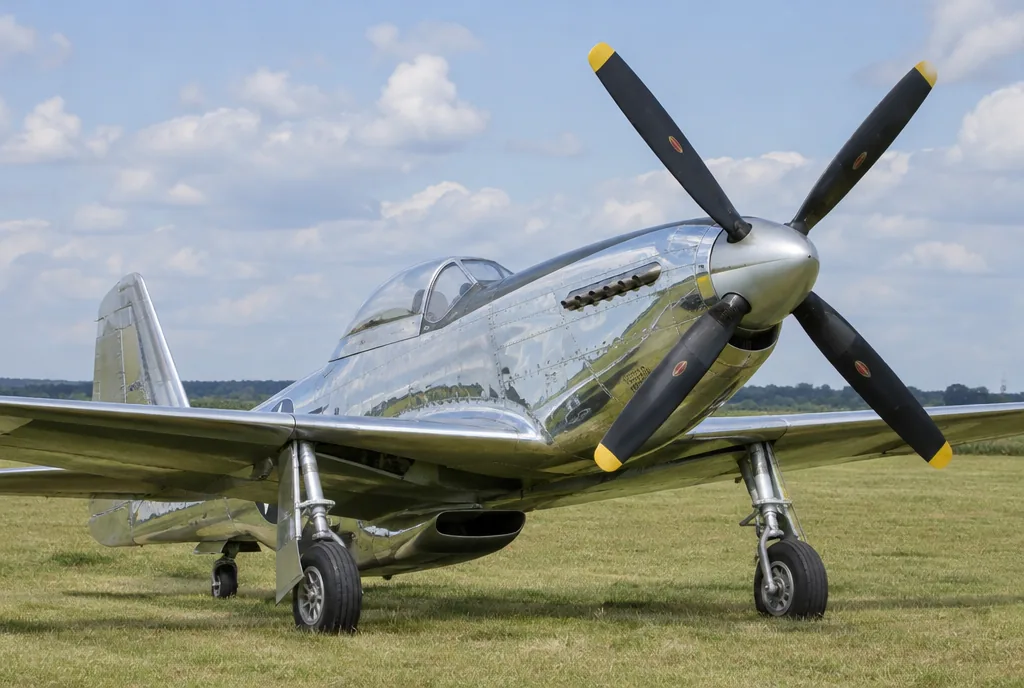
Bessie Coleman, the first Black woman pilot, was also the first woman of African American and Indigenous descent to earn an official Fédération Aéronautique Internationale license. She received it in France on June 15, 1921, after American flight schools had refused to admit her. With daring exhibition flights, she then made aviation visible to audiences who had rarely seen a Black woman at the controls.
How Bessie Coleman found a way into the cockpit
Her route to aviation began far from an airfield. Coleman was born on January 26, 1892, in a one-room, dirt-floor cabin in Atlanta, Texas. She was the tenth of 13 children. When she was two, the family moved to Waxahachie, where her father, George Coleman, bought a quarter-acre lot in the segregated eastern part of town.
In 1901, her father left the family and returned to Oklahoma. Her mother, Susan Coleman, supported the household as a domestic worker, while Bessie helped care for her younger sisters. She attended Waxahachie’s one-room school for Black children through the eighth grade. As a child, she read Uncle Tom’s Cabin and said, “I’ll never be a Topsy or an Uncle Tom!”
Her education included one term, in 1910–11, at the Colored Agricultural and Normal University in Langston, Oklahoma, now Langston University. She paid for it by working as a laundress. At 23, she moved to Chicago and worked as a manicurist. There, stories from World War I pilots gave a specific shape to her ambition: she wanted to fly.
Bessie Coleman crossed an ocean for the license America refused
No American flight school would accept an African American woman. Robert Abbott, publisher of the Chicago Defender, urged Coleman to go to France. She learned French at the Berlitz language school, saved what she could, and sailed for France aboard the S.S. Imperator on November 20, 1920.
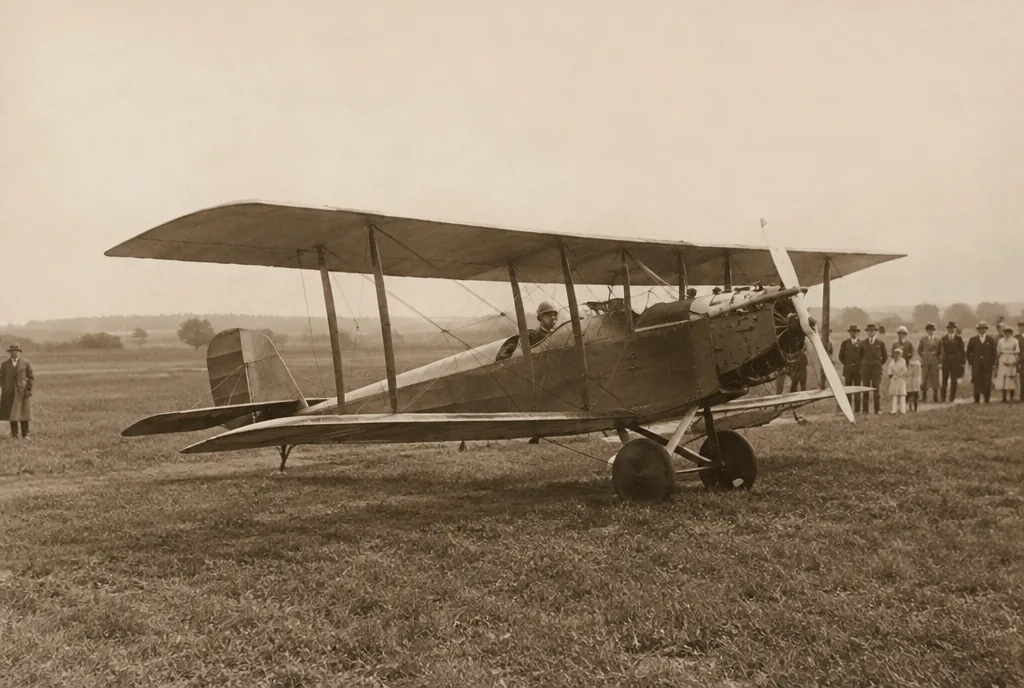
Coleman trained at the École d’Aviation des Frères Caudron in Le Crotoy on the Somme, flying a Nieuport Type 564. The fragile aircraft was built from wood, wire, steel, aluminum, cloth, and pressed cardboard and was controlled with a stick as thick as a baseball bat. After seven months of training, the FAI issued her pilot license on June 15, 1921.
That document made Coleman the first woman of African American and Indigenous descent to hold an official FAI license and the first person of color anywhere in the world to receive one. She did not treat the license as a finish line. After earning it, she took additional aerobatic training, preparing for the kind of flying that could draw a crowd back in the United States.
What made “Queen Bess” famous was more than a pilot license
In September 1921, Coleman returned to the United States. Newspapers celebrated her as a fully qualified aviator and the first of her race. On September 3, 1922, she made her first public flight in New York, the first public flight by a Black woman anywhere in the world. To audiences, she was “Queen Bess” and “Brave Bessie.”
Her shows offered loops, figure eights, wing-walking, and parachute jumps. Her choices on the ground mattered as much as those maneuvers. Coleman refused to appear at shows that segregated or excluded Black spectators. When offered a film role that required a degrading portrayal, she declined: “No Uncle Tom stuff for me.”
The risks were immediate. In February 1923, only days after she bought an airplane of her own, its engine failed at 300 feet over Santa Monica and the plane crashed. Coleman broke a leg and three ribs and spent three months in the hospital. From her bed, she sent a telegram: “Tell them all that as soon as I can walk I’m going to fly!”
These Bessie Coleman facts show the scale of her work
| Milestone | What it meant |
|---|---|
| June 15, 1921 | She received an official FAI pilot license in France. |
| September 3, 1922 | Her New York appearance became the first public flight by a Black woman worldwide. |
| 1923 | She recovered from a 300-foot crash after an engine failure. |
| Summer 1925 | She gave shows and lectures across Texas, including Houston, Dallas, Fort Worth, and Waxahachie. |
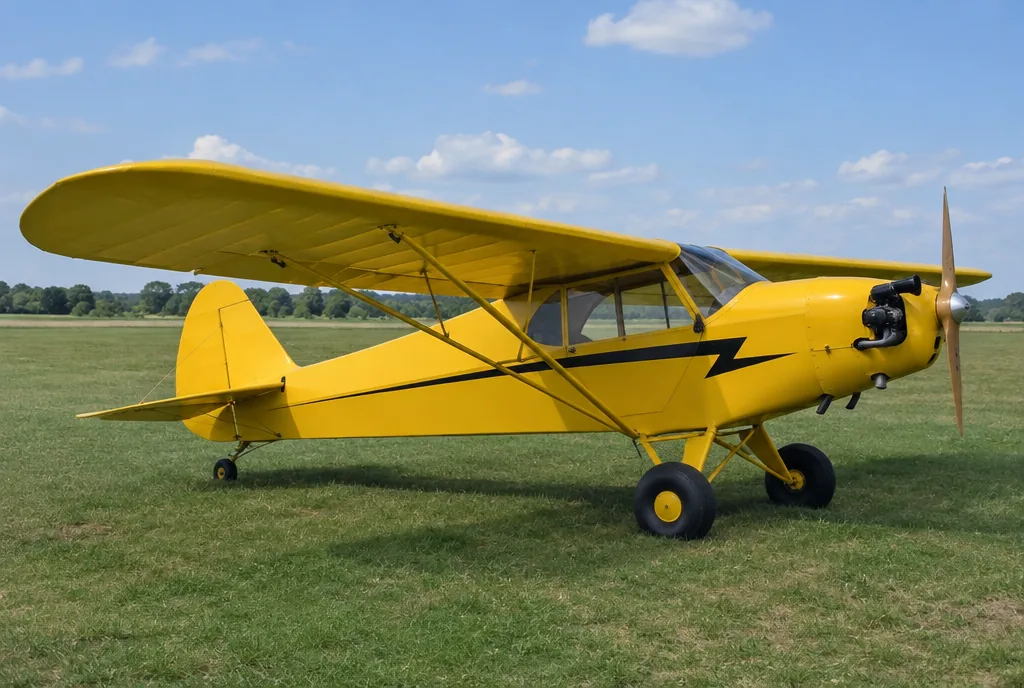
After the 1923 crash, Coleman financed a Curtiss JN-4 “Jenny” by dropping flyers for a tire company from the air. In her words, the yellow airplane was “my canary.” With a 90-horsepower Curtiss OX-5 V-8 engine, a Jenny could reach 75 mph and had a service ceiling of 10,000 to 11,000 feet. In summer 1925, she brought flying exhibitions and lectures to Texas cities and to Waxahachie, where her story had begun.
For readers looking for Bessie Coleman facts for kids, the central point is plain: she faced a closed door, acquired a new language and traveled to another country to learn, then returned to demonstrate what she had learned in front of large public audiences. Her stated purpose went beyond personal fame: Coleman hoped to establish a flight school for African American youth.
The Jacksonville test flight ended Bessie Coleman’s life
On April 30, 1926, Coleman and her mechanic, William Wills, took off in Jacksonville, Florida, for a test flight ahead of a planned air show. About ten minutes after takeoff, at roughly 2,000 feet, the Jenny entered a spin, turned over, and threw her from the cockpit.
She was not wearing a safety belt because she wanted to look over the edge and pick a landing site for a planned parachute jump. The cause was a loose wrench that had jammed the controls. Wills, still strapped in, crashed with the plane nearby. Both died instantly; Coleman was 34.
Sources disagree on how far she fell. The Library of Congress gives 2,000 feet, about 610 meters. Other accounts give 1,500 feet or 1,000 feet. The best-supported answer is about 2,000 feet, but the records differ.
Three common misconceptions leave out the most important context
She was not simply the first American woman to fly
Coleman was the first Black woman pilot and the first woman of African American and Indigenous descent with an official FAI license. She was also the first person of color worldwide to receive that official license.
Amelia Earhart did not come first
Coleman’s license dates to 1921. Amelia Earhart received hers in 1922 or 1923 and became widely known in 1928 after crossing the Atlantic as a passenger. By then, Coleman had already become a national figure through her flying.
Her work was not only about stunt flying
Although flying exhibitions paid the bills and built her reputation, Coleman used her public role to challenge exclusion. Her best-known quote makes the larger goal clear: “The air is the only place free from prejudices.”
Her legacy turned a short career into a long aviation history
After Coleman’s death, memorial services took place in Jacksonville, Orlando, and Chicago. In Chicago, civil rights leader Ida B. Wells led a service attended by an estimated 5,000 to 10,000 mourners. Her coffin, draped with an American flag, was escorted by six uniformed pallbearers from the African American 8th Infantry. She was buried at Lincoln Cemetery in Cook County, Illinois.
Her influence reached beyond memorials. In 1929, William J. Powell founded the Bessie Coleman Aero Club, and in 1931 Black pilots from Chicago began an annual flyover of her grave. In 1977, African American women pilots formed the Bessie Coleman Aviators Club. Her example also inspired the Tuskegee Airmen and remains a major milestone in Black aviation history.
Public recognition has continued. In 1995, the U.S. Postal Service issued a 32-cent Bessie Coleman stamp, and in 2001 she entered the National Women’s Hall of Fame. In January 2023, the U.S. Mint released the Bessie Coleman quarter, the first American Women Quarters Program coin of that year. The reverse shows her putting on a flight suit; “6.15.1921” marks the date of her license.
Frequently Asked Questions
How did Bessie Coleman die?
During a Jacksonville test flight on April 30, 1926, a wrench jammed the Jenny’s steering controls. At about 2,000 feet, the airplane went into a spin and flipped over, throwing Coleman out; she and mechanic William Wills died instantly.
How far did Bessie Coleman fall when she died?
The Library of Congress gives 2,000 feet, about 610 meters. Other accounts give 1,500 or 1,000 feet, so about 2,000 feet is the best-supported figure, not an exact one.
Who came first, Bessie Coleman or Amelia Earhart?
Coleman came first. She received her FAI license on June 15, 1921; Earhart received hers in 1922 or 1923 and became famous in 1928.
What was Bessie Coleman doing when she died?
She was on a test flight before a planned air show. Without a safety belt, she was looking over the cockpit edge for a suitable parachute-landing site when the airplane lost control.
Did Bessie Coleman have a child?
No. She married Claude Glenn in 1917, but the couple separated soon after and had no children.