The first flight around the world began at Sand Point in Seattle on April 6, 1924, and ended at the same airfield on September 28, 1924. Four U.S. Army Air Service biplanes set out; two of them completed the whole journey, joined at the end by a replacement aircraft. In 175 days the crews covered about 27,550 miles and spent 371 hours and 11 minutes in the air, at an average speed of roughly 70 miles per hour.
A race between nations
By the early 1920s airplanes had crossed the Atlantic, but no one had flown around the globe. Britain, France, Italy, Portugal and Argentina all prepared attempts in 1924. The U.S. Army Air Service, led by General Mason Patrick, wanted the record for the United States and wanted to show that long-range flying was a matter of planning, not luck.
The Army chose a westward route through Alaska, the Aleutian Islands, Japan and Asia, then Europe and the North Atlantic. Flying west meant meeting the Aleutians before the summer fog season and crossing the North Atlantic before the autumn storms. A team of advance officers traveled the route months ahead to arrange landing sites, permissions and supplies.
The Douglas World Cruiser
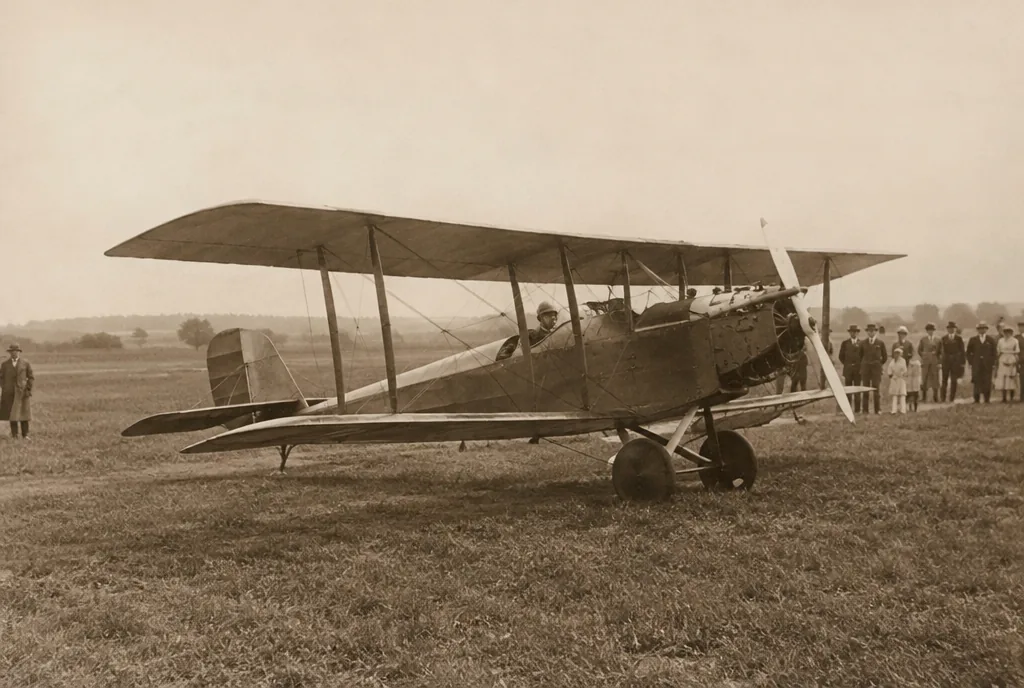
The Army asked the young Douglas Aircraft Company in Santa Monica, California, to adapt its DT torpedo bomber. Donald Douglas delivered a prototype within about 45 days, and four production aircraft followed. The result was the Douglas World Cruiser:
- open-cockpit biplane with two seats in tandem
- one water-cooled Liberty V-12 engine of 420 horsepower
- wingspan of about 50 feet
- large fuel tanks for long overwater legs
- landing gear that could be changed between wheels and twin floats
The aircraft were named after four American cities: Seattle, Chicago, Boston and New Orleans.
Crews
- Seattle: Major Frederick L. Martin (flight commander) and Staff Sergeant Alva L. Harvey
- Chicago: Lieutenant Lowell H. Smith and Lieutenant Leslie P. Arnold
- Boston: Lieutenant Leigh Wade and Staff Sergeant Henry H. Ogden
- New Orleans: Lieutenant Erik H. Nelson and Lieutenant John Harding Jr.
Each crew of two included a pilot and a mechanic-copilot. Because there was no room for ground crews, the fliers did most of their own maintenance, including several complete engine changes along the way.
Logistics: spare engines and fuel caches
The success of the flight depended on supplies waiting along the route. Spare engines, propellers, pontoons, fuel and oil were shipped in advance to dozens of stops. The U.S. Navy and Coast Guard positioned ships in the North Pacific and the North Atlantic to act as weather stations, supply depots and rescue boats. Local officials, oil companies and foreign air forces helped at stops in Asia and Europe.
Alaska: losing the flagship
The trouble started early. Bad weather held the flight in Seattle and Alaska for days at a time, and the Seattle needed a new engine in Alaska. On April 30, 1924, Major Martin and Sergeant Harvey flew into dense fog over the Alaska Peninsula and crashed into a mountainside. Both men survived with minor injuries. For ten days they walked through snow and wilderness until they reached a cannery at Port Moller on May 10. The other three aircraft continued under the command of Lowell Smith.
Across the Pacific and Asia
From Attu, the westernmost of the Aleutians, the three cruisers flew to the Komandorski Islands and then to the Kuril Islands and Japan. It was the first crossing of the Pacific by air. They reached Japan in late May and moved on to China, French Indochina, Siam (today Thailand) and Burma.
In India the fliers switched from floats to wheels for the long overland legs. The route continued through Persia, Iraq, Syria and Turkey to the Balkans. Heat, dust and monsoon rains wore out engines faster than expected, so the crews changed them again at several stops.
Europe and the North Atlantic
The flight reached Paris on July 14, 1924, Bastille Day, and then London. In England the cruisers were fitted with floats again for the hardest part of the route: the North Atlantic via the Orkney Islands, the Faroe Islands, Iceland and Greenland.
On August 3, 1924, the Boston lost oil pressure and was forced down at sea between the Orkneys and the Faroes. Wade and Ogden were picked up unhurt, but the aircraft was damaged when a ship tried to lift it out of the water, and it sank. The Chicago and the New Orleans went on alone, waiting out fog and ice in Iceland before crossing to Greenland and Labrador.
Homecoming
At Pictou, Nova Scotia, Wade and Ogden rejoined the flight in Boston II, the original prototype, sent from the United States. The three aircraft flew to Boston and then to Washington, D.C., where President Calvin Coolidge welcomed them. A tour across the country followed, with large crowds at every stop. On September 28, 1924, the Chicago, the New Orleans and Boston II landed at Sand Point in Seattle, where the journey had started 175 days earlier.
None of the rival foreign teams completed a circumnavigation that year. The American fliers became national celebrities, and each received the Distinguished Service Medal.
Why the flight mattered
The 1924 world flight did not open a passenger route. Its importance lay in proof of method. It showed that aircraft could cross oceans and continents if fuel, parts and weather information were in place beforehand, and that crews could keep machines running far from home. The same principles later guided airmail routes, transoceanic airline services and military air transport.
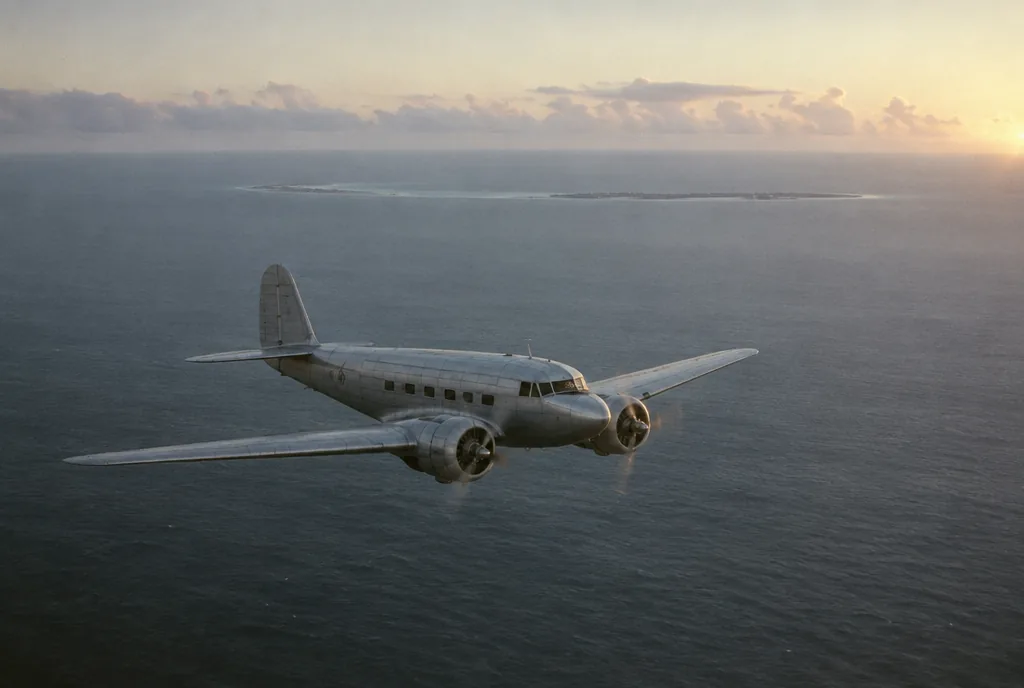
The flight also made the Douglas name. Douglas Aircraft adopted the motto “First Around the World” and went on to build the DC-3 and a long line of airliners.
Where the aircraft are today
- Chicago: National Air and Space Museum, Washington, D.C.
- New Orleans: preserved in California and shown at aviation museums in the Los Angeles area
- Seattle: the wreck was recovered from the Alaska Peninsula and is at the Alaska Aviation Museum in Anchorage
Frequently Asked Questions
Who made the first flight around the world?
Crews of the U.S. Army Air Service flying Douglas World Cruisers. The Chicago (Lowell Smith and Leslie Arnold) and the New Orleans (Erik Nelson and John Harding) flew the entire route, with Leigh Wade and Henry Ogden completing it in Boston and Boston II.
How long did the first round-the-world flight take?
175 days, from April 6 to September 28, 1924, with 371 hours and 11 minutes of actual flying time.
How far did they fly?
About 27,550 statute miles (23,942 nautical miles), with dozens of stops across three continents and two oceans.
What happened to the Seattle?
It crashed in fog on the Alaska Peninsula on April 30, 1924. Major Martin and Sergeant Harvey survived and walked for ten days to reach Port Moller.