The first aircraft carrier was not one ship but a series of answers to a new naval problem: how could an airplane leave a warship, return to it, and operate again? HMS Argus was the first carrier with a continuous flight deck in 1918, Hōshō was the first completed carrier built for that purpose in 1922, and USS Langley was the first U.S. aircraft carrier. The path to all three began with a wooden platform, a precarious landing, and pilots willing to test the limits of ships and airplanes.
Before carriers, two daring flights changed naval aviation
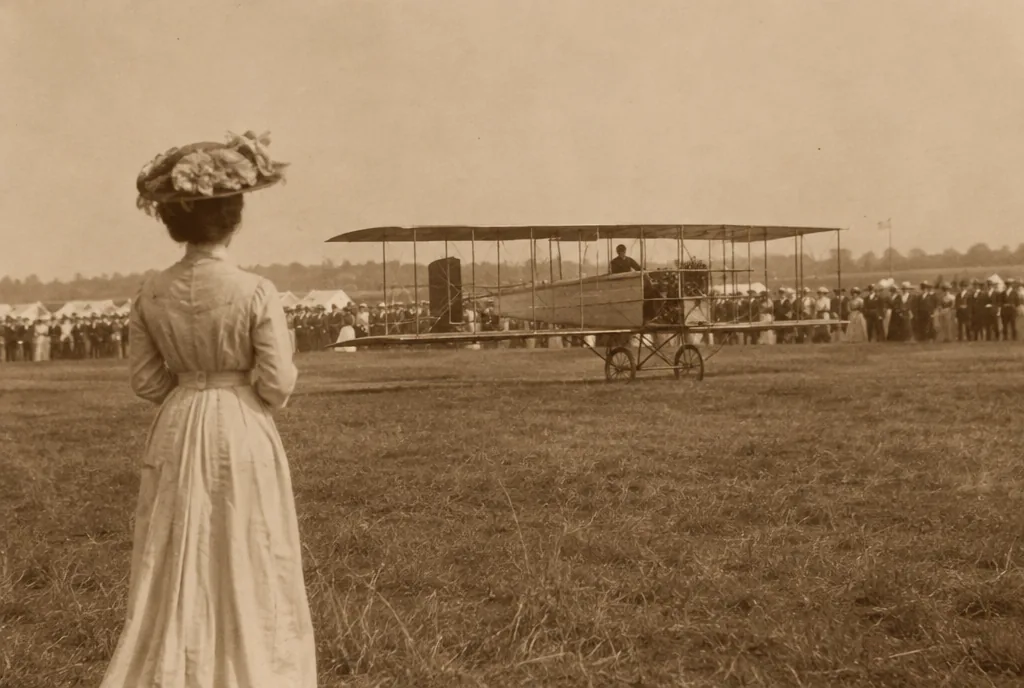
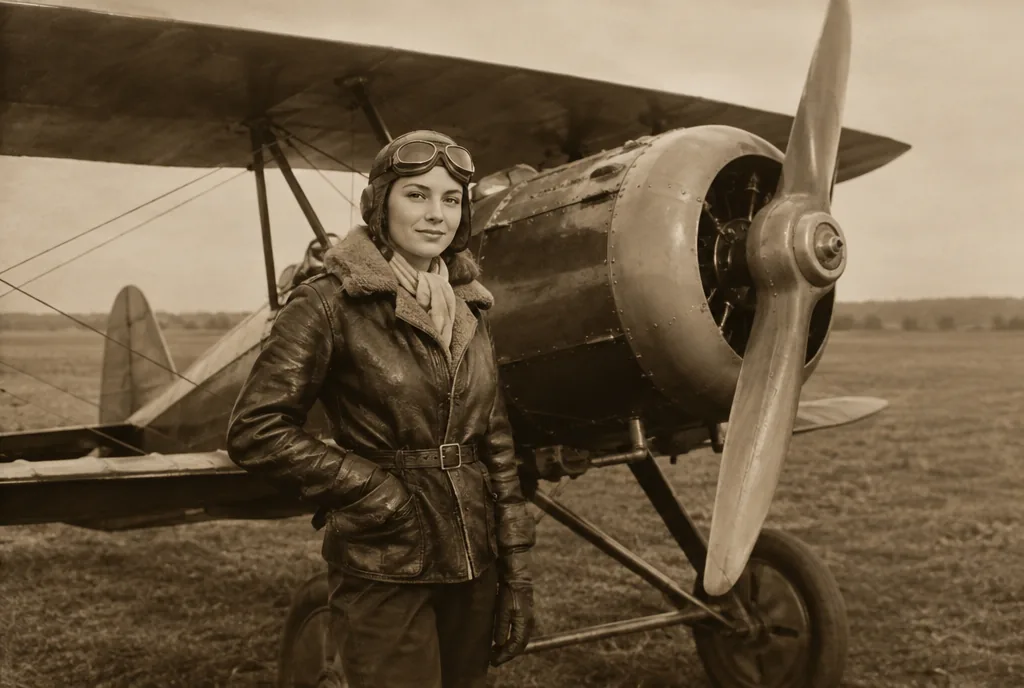
On November 14, 1910, Eugene Ely made the first airplane takeoff from a warship. A 57-foot-long, 28-foot-wide wooden platform projected over the bow of USS Birmingham at Hampton Roads, Virginia. Ely launched a Curtiss Pusher from that platform. The airplane skimmed the water, then climbed to 400 feet and landed at the Norfolk Navy Yard, 2.5 miles away.
Even so, the experiment answered only half the question. An airplane that could leave a ship was useful, but a naval force also needed a way to bring one back. On January 18, 1911, Ely approached USS Pennsylvania in San Francisco Harbor in a Curtiss Model D. A 119-foot-9-inch-long wooden landing platform had been built on the armored cruiser’s stern. It was 32 feet wide, a narrow target for a biplane.
Twenty-two crosswires weighted by sandbags were stretched across that platform. Three hooks fitted to Ely’s airplane caught the wires, and the aircraft stopped after a run of only 30 feet. Those hooks and wires were a practical ancestor of the tailhook and arresting gear that later made routine deck landings possible. Ely died in an airplane accident in Macon, Georgia, on October 19, 1911, two days before his 25th birthday, but his two shipboard demonstrations had already defined the core cycle of carrier aviation: launch, recover, launch again.
How should we define the first aircraft carrier?
The phrase “first aircraft carrier” changes meaning depending on the test applied. A ship that supports a single experimental flight is not necessarily a ship built to operate aircraft repeatedly. A vessel with a landing deck is not necessarily a purpose-built carrier. The early history is clearer when each first is named precisely.
In 1916, HMS Furious, originally built as a Courageous-class battlecruiser, was altered for aircraft operations and provided an important intermediate step. On August 2, 1917, Squadron Commander Edwin Dunning landed a Sopwith Pup on Furious while the ship was moving. It was the first aircraft landing on a moving warship. Dunning landed across the ship’s course and relied on men to hold the wings, a vivid sign that a landing surface alone was not yet enough.
For the next answer, look to Argus. Begun in Glasgow as the Italian passenger ship Conte Rosso, she was bought by the British Admiralty before completion and converted. Commissioned on September 14, 1918, she had the world’s first uninterrupted, or flush, flight deck. There was no island structure above the deck; her funnels were led out to the sides. Her deck was 549 feet long and 68 feet wide, and she could operate 20 aircraft.
A different first belongs to Hōshō. The Japanese carrier was launched on November 13, 1921, and commissioned on December 27, 1922. She was the first completed carrier designed and built from the keel up for that role. Her design had begun in 1919 as a seaplane carrier with a forward flying-off deck, then changed repeatedly after Japanese observers studied Furious and Argus. Hōshō had two hangars: a forward hangar for nine fighters and a two-story aft hangar for torpedo bombers. Her original starboard-side island was removed in 1923 because it was too small and did not work well.
USS Langley turned an American collier into a flying ship
In the United States, the first aircraft carrier, USS Langley (CV-1), did not begin as a carrier at all. She had been USS Jupiter (AC-3), a turbo-electric collier built to carry coal. Jupiter was laid down in 1911, launched on August 24, 1912, and commissioned on April 7, 1913. She was also the first turbo-electric ship in the U.S. Navy.
On July 11, 1919, authorization arrived to convert Jupiter. The collier was decommissioned on March 24, 1920, and conversion took place at Norfolk Naval Shipyard. When Langley entered commission on March 20, 1922, the United States had a carrier of its own, named for aviation pioneer and Smithsonian Institution secretary Samuel Pierpont Langley.
The layout showed the practical character of the conversion. A flight deck was placed above the original superstructure. Langley had no funnel or island rising through it, giving her the flat-deck profile of the early carrier era. The deck measured 534 feet long and 64 feet wide, and the ship could carry 36 airplanes. Her turbo-electric machinery gave her a speed of 15.5 knots.
Langley was a direct example of how an existing hull could be remade for aviation. In 1937 she was converted into the seaplane tender AV-3. Japanese bombers sank her off Java on February 27, 1942.
Early carrier milestones show how one idea became a system
Rather than a clean handoff from one “first” to another, early aircraft carrier history unfolded as a series of experiments. Each event solved a separate problem: getting an airplane off a deck, stopping one on a deck, creating a usable flight deck, or building a vessel around aircraft from the start.
| Ship | Date | Milestone |
|---|---|---|
| USS Birmingham | November 14, 1910 | Eugene Ely made the first airplane takeoff from a warship from a 57-by-28-foot bow platform. |
| USS Pennsylvania | January 18, 1911 | Ely made the first shipboard landing, using hooks and 22 sandbag-weighted crosswires. |
| HMS Furious | August 2, 1917 | Edwin Dunning made the first landing on a moving warship. |
| HMS Argus | September 14, 1918 | Commissioned as the first carrier with a continuous flush flight deck. |
| USS Langley | March 20, 1922 | Commissioned as the first aircraft carrier of the U.S. Navy. |
| Hōshō | December 27, 1922 | Commissioned as the first completed purpose-built aircraft carrier. |
During these experiments, flight decks changed rapidly. Birmingham’s platform was a wooden extension over a cruiser’s bow. Argus made the modern idea of a full-length deck real in 1918. Furious, rebuilt between June 1921 and September 1925 with a 576-by-92-foot continuous deck, used a deck that rose toward the bow to slow landing airplanes. That slope was an early alternative to arresting gear.
The materials changed as well. Early decks were unarmored wood. The Essex class introduced steel armored decks in 1943. From Birmingham’s improvised platform to the long deck of Langley, the surface became a place not merely to take off, but to organize an air group’s entire work at sea.
World War II made carrier aviation the center of sea power
On July 19, 1918, the carrier’s experimental years received a military preview. Seven Sopwith Camel fighters took off from HMS Furious for the Tondern Raid, the first carrier-based air attack in history, against German Zeppelin bases in Schleswig-Holstein. In the next world war, carrier aviation moved from a novel raid to the main means by which fleets struck at a distance.
At the start of the Pacific War, Japan had ten aircraft carriers and used six of them at Pearl Harbor. The scale of the American response was enormous. During World War II, the U.S. Navy built 24 Essex-class fleet carriers, 17 of them completed during the war, and 122 escort carriers: 151 carriers in all. By August 1945, the Navy had 111 carriers of every type in its inventory, including 24 Essex-class ships, eight light carriers, and 74 escort carriers.
Carrier aviation did not make the war at sea safer or simpler. Eleven U.S. carriers were lost, including USS Lexington (CV-2), USS Yorktown (CV-5), USS Hornet (CV-8), and USS Wasp (CV-7). Yet the Battle of the Coral Sea, fought from May 4 to 8, 1942, demonstrated the new reality with unusual clarity: it was the first naval battle in which the fleets fought only through aircraft, and not a single ship from either fleet saw the other.
Why the American carriers were not at Pearl Harbor
On December 7, 1941, all three carriers of the Pacific Fleet, USS Enterprise (CV-6), USS Lexington (CV-2), and USS Saratoga (CV-3), were at sea rather than in Pearl Harbor. Each was on a delivery mission or in transit elsewhere.
Enterprise had sailed on November 28 to deliver 12 Marine Corps F4F Wildcat fighters to Wake Island. On the morning of the attack, she was about 215 miles west of Oahu. Lexington had sailed on December 5 to fly 18 SB2U Vindicator dive bombers to Midway; she was about 500 nautical miles southeast of Midway on December 7. Saratoga had just finished an overhaul at Bremerton, Washington, and did not reach San Diego until late that morning.
With none of the three in the harbor, Japan did not eliminate the entire U.S. carrier fleet in one attack. That outcome has been described as a strategic Japanese error.
The first nuclear carrier stretched the original idea to a new scale
USS Enterprise (CVN-65) was the world’s first nuclear-powered aircraft carrier. Her keel was laid on February 4, 1958; she was launched on September 24, 1960, and commissioned on November 25, 1961. The path from Birmingham’s 57-foot platform to Enterprise was not simply a matter of bigger dimensions. It was a change in the power plant beneath the deck.
Below her deck, eight Westinghouse A2W pressurized-water reactors drove four Westinghouse steam turbines with a combined 280,000 horsepower. She remains the only carrier with more than two reactors and the only one with four rudders rather than two. At 1,123 feet in overall length and 93,284 tons at full load, she was the longest warship of her time and could exceed 33.6 knots.
That scale extended to daily operations. Enterprise had four C-13 steam catapults, each 286 feet long, four elevators, and a crew of up to 5,828 for whom more than 20,000 meals could be served each day. On May 13, 1962, she joined USS Long Beach and USS Bainbridge in the world’s first nuclear-powered task group. Enterprise served from 1961 to 2012 and was struck from the fleet on February 3, 2017.
Three common mix-ups obscure the real firsts
A first takeoff is not the first carrier
Ely’s flight from Birmingham was the world’s first airplane takeoff from a warship. Birmingham was a cruiser with an added wooden platform, not a purpose-built aircraft carrier. The achievement proved a possibility; it did not settle which ship should hold the carrier title.
Argus and Hōshō do not claim the same milestone
Commissioned in 1918, Argus was the first carrier with a continuous flight deck. Hōshō was the first completed carrier built from the keel up for aircraft operations, commissioned in 1922. Calling either “the first” without the definition leaves out the distinction that makes both ships important.
Langley was first in the United States, but she was a conversion
Despite beginning life as Jupiter, Langley was the first U.S. Navy aircraft carrier. Her conversion is part of the story, not an exception to it: early carrier development repeatedly adapted existing ships while navies learned what a carrier required.
Frequently Asked Questions
What was the first aircraft carrier in the world?
The answer depends on the definition. HMS Argus was the first carrier with a continuous flight deck, commissioned in 1918. Hōshō, commissioned in 1922, was the first completed carrier built specifically as a carrier.
When was the first aircraft carrier built?
HMS Argus was converted from a passenger ship and entered service on September 14, 1918. HMS Hermes was laid down as the first carrier designed from the start on January 15, 1918, but Hōshō was completed first, entering service on December 27, 1922.
What was the first U.S. aircraft carrier?
USS Langley (CV-1) was the first U.S. Navy aircraft carrier. Converted from the collier USS Jupiter, she was commissioned as Langley on March 20, 1922.
What was the first nuclear-powered carrier?
USS Enterprise (CVN-65) was the world’s first nuclear-powered aircraft carrier. She entered commission on November 25, 1961, with eight Westinghouse A2W reactors.
Why were carriers not at Pearl Harbor?
Enterprise and Lexington were at sea on missions to deliver aircraft to Wake Island and Midway, while Saratoga was traveling after an overhaul at Bremerton. All three Pacific Fleet carriers were therefore outside Pearl Harbor on December 7, 1941.